

Commercial Septic System Upgrade in Wetland Resource Area
Overview
A popular restaurant and previous Bracken Engineering, Inc. (BEI) client, in Bourne, Massachusetts contacted BEI with concerns regarding the existing leaching field for their septic system. BEI designed and permitted the system currently in place and the leaching facility was approaching the end of its operational lifespan. The existing septic system designed by BEI utilized multiple pre-treatment solutions to accommodate the heavy load of grease, suspended solids, and nitrogen. It utilized an Envro-Septic leaching facility (Formerly known as Presby Enviro-Septic) to ensure even dispersal, a concern due to the systems proximity to Wetland Resource Areas.
Solution
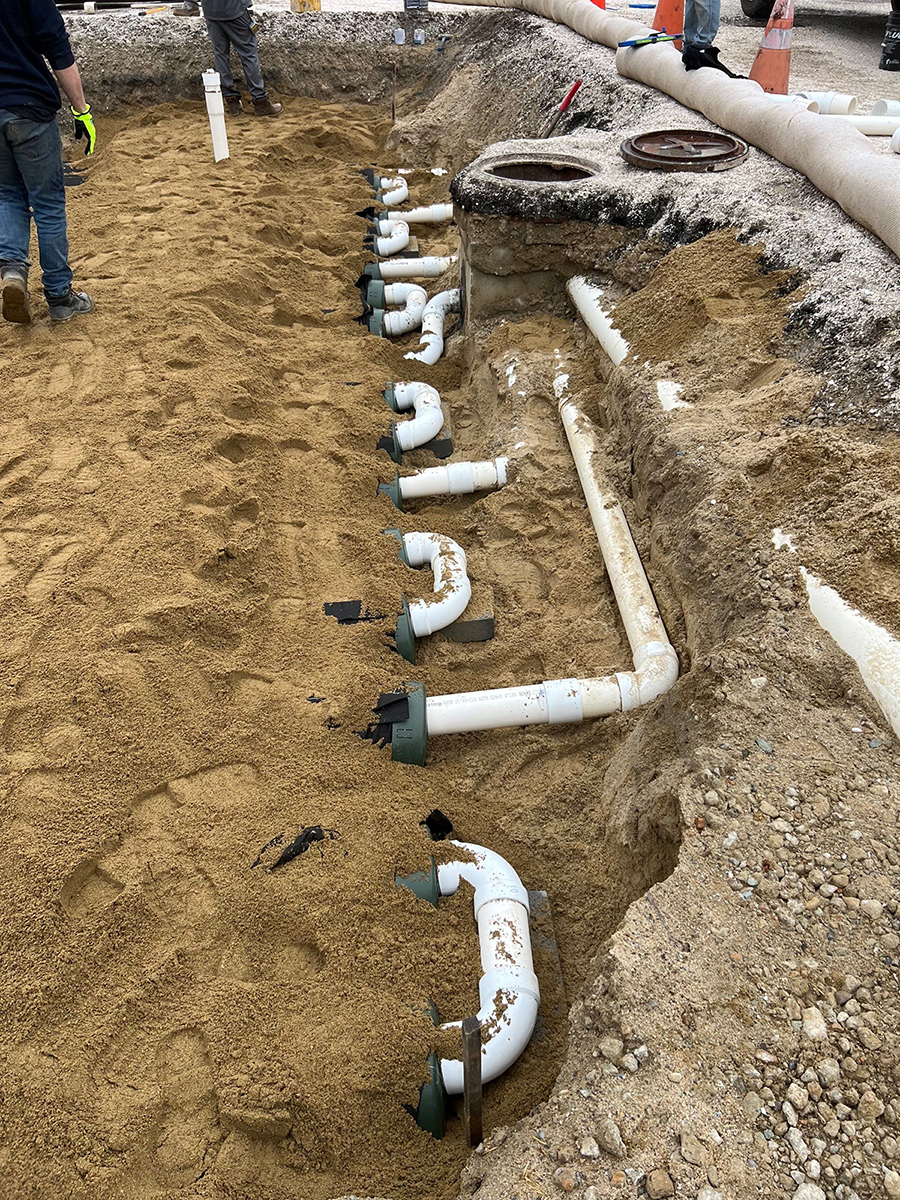
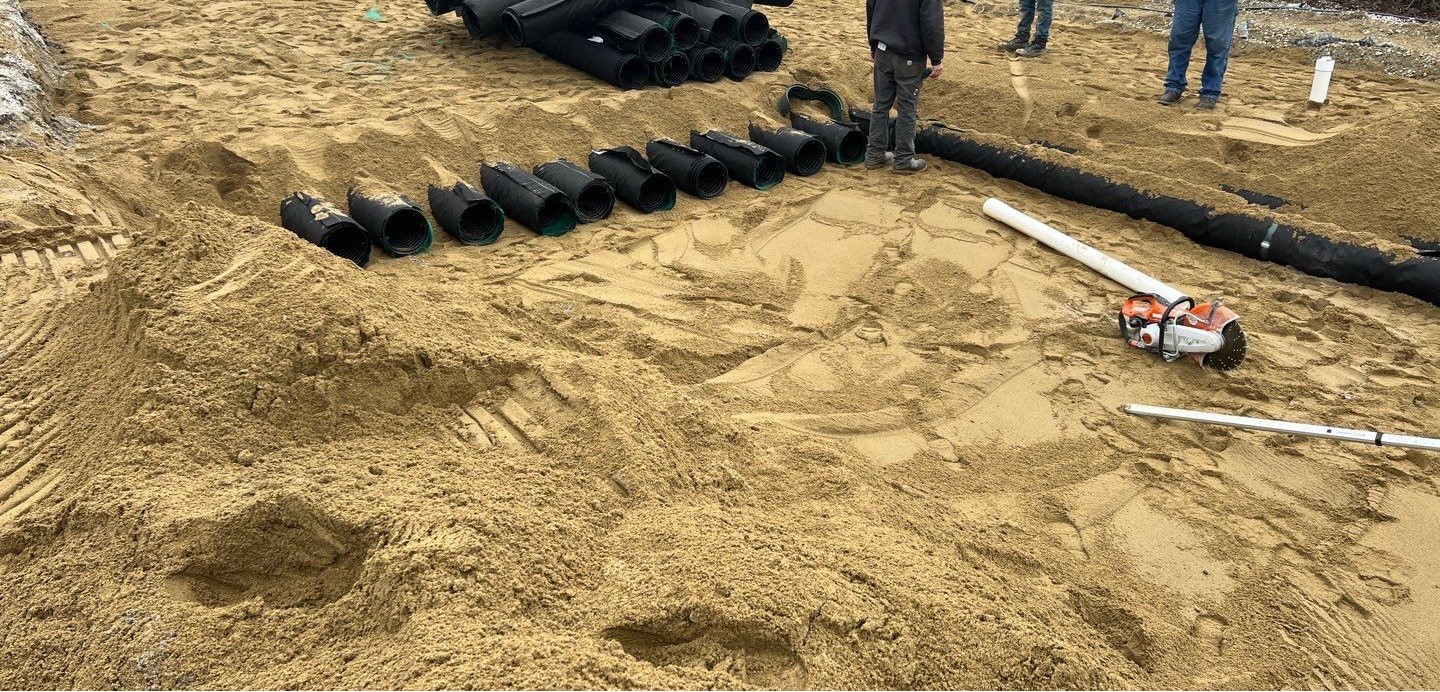
BEI provided comprehensive design, permitting, and construction administration services for the design and installation of a leaching field consisting of an Innovative/Alternative technology known as Enviro-Septic.
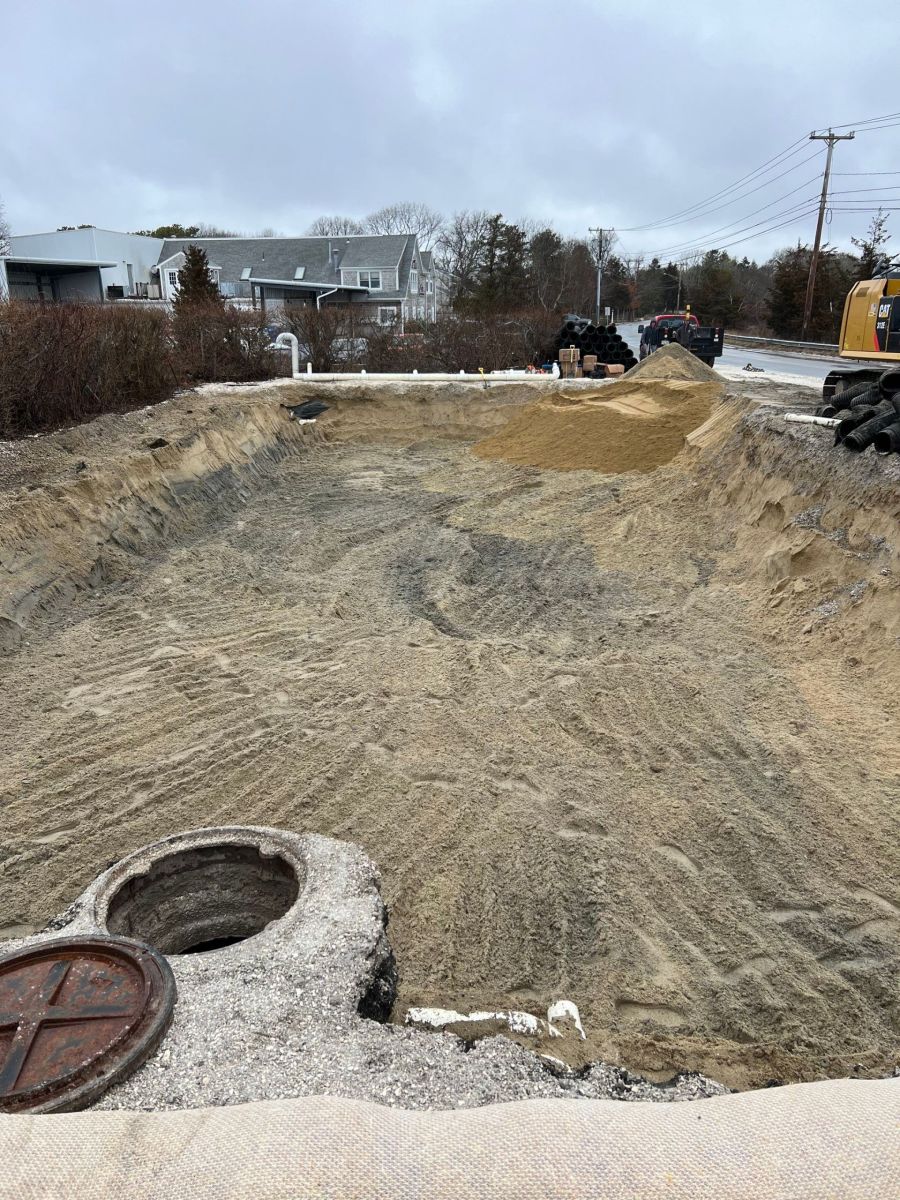
BEI had previously surveyed the parcel during the initial system design, therefore only a brief field visit was required to confirm record information. The new Enviro-Septic leaching facility was designed to accommodate the daily flow of the restaurant, and to integrate into the total system with no changes needed to the other structural components. The size of the property, as well as its direct frontage on a number of Wetland Resource Areas, required that the project be permitted through both the local Conservation Commission and the Board of Health. Lastly, careful coordination between BEI, the Town, and the Contractor was needed to ensure minimal disruption to the daily operations of the restaurant.
BEI had previously surveyed the parcel during the initial system design, therefore only a brief field visit was required to confirm record information. The new Enviro-Septic leaching facility was designed to accommodate the daily flow of the restaurant, and to integrate into the total system with no changes needed to the other structural components. The size of the property, as well as its direct frontage on a number of Wetland Resource Areas, required that the project be permitted through both the local Conservation Commission and the Board of Health. Lastly, careful coordination between BEI, the Town, and the Contractor was needed to ensure minimal disruption to the daily operations of the restaurant.
Importance
Proper maintenance and timely replacement of septic systems are essential for protecting public health, preserving natural resources, and ensuring long-term property value. Aging or failing septic systems can release untreated wastewater into the surrounding soil and groundwater, increasing the risk of contamination to wells, waterways, and nearby ecosystems. Regular inspections and proactive upgrades help prevent nutrient overloads, harmful bacteria, and environmental degradation.
In this instance, the property lies directly adjacent to sensitive resource areas including a Coastal River and Salt Marsh. Effective treatment and dispersal of wastewater is critical to the health of the ecosystems associated with these Resource Areas. Despite having an advanced septic system in place, without on-going operational monitoring and maintenance, the treatment goals of the system will not be met. The diligence of this particular owner allowed a pro-active approach to the replacement of this system before a failure could occur.
In this instance, the property lies directly adjacent to sensitive resource areas including a Coastal River and Salt Marsh. Effective treatment and dispersal of wastewater is critical to the health of the ecosystems associated with these Resource Areas. Despite having an advanced septic system in place, without on-going operational monitoring and maintenance, the treatment goals of the system will not be met. The diligence of this particular owner allowed a pro-active approach to the replacement of this system before a failure could occur.